Practice Point
- A short, intense, comprehensive program can provide education and training that can lead to more confidence in disease management for people with multiple sclerosis.
Publication
Research Article
A short, intense, comprehensive program can provide education and training that can lead to more confidence in disease management for people with multiple sclerosis.
Background: A comprehensive personalized care approach may better support individuals with multiple sclerosis (MS) in managing their health, function, and quality of life than clinical care that does not incorporate evidence-based, comprehensive, and personalized care. This pilot study compared outcomes among people with MS who participated in a 4-day comprehensive MS care program, those treated in an MS institute, and those who received traditional MS care.
Methods: This study was conducted at a nonprofit rehabilitation center. Participants were people with MS who (1) were in a 4-day comprehensive MS program (4Day; n = 24), (2) were receiving care in an MS institute (MSI; n = 10), or (3) were members of an online patient research platform (iConquerMS; iCMS; n = 21). Data were collected at baseline and 1, 6, 12, and 24 months via an electronic portal. They included scores on the Expanded Disability Status Scale, Patient-Determined Disease Steps, MS Impact Scale-29, Multiple Sclerosis Self-Management Scale-Revised, MS Walking Scale-12, Quality of Life in Neurological Disorders, and Spinal Cord Injury Exercise Self-Efficacy Scale.
Results: All groups showed improvements across most outcomes at 1 and 6 months. The 4Day and MSI groups had greater gains in self-management, self-efficacy, and quality of life, particularly at 1 month, compared with the iCMS group.
Conclusions: Comprehensive MS care, whether delivered intensively over 4 days or through an integrated outpatient program, may enhance self-efficacy and quality of life more effectively than standard care alone. Further research is needed due to small sample sizes, pandemic-related challenges, and limited clinical data for one group.
Virginia C. Crawford Research Institute, Shepherd Center, Atlanta, GA (DB, WMS, TW, BT, MM); School of Liberal Arts, Georgia Gwinnett College, Lawrenceville, GA (WMS); Andrew C. Carlos MS Institute, Shepherd Center, Atlanta, GA (BT); Program in Exercise Science, Physical Therapy Department, Marquette University, Milwaukee, WI (AVN); Cleveland Clinic Lerner College of Medicine, Cleveland, OH (DMM); Case Western Reserve University, Cleveland, OH (DMM); Mellen Center for Multipls Sclerosis Treatment and Research, Cleveland Clinic, Cleveland, OH (DMM). Correspondence: Deborah Backus, PhD, PT, Shepherd Center, 2020 Peachtree Rd NW, Atlanta, GA 30309; email: Deborah.Backus@shepherd.org.
Multiple sclerosis (MS) is a progressive neuroinflammatory and neurodegenerative disorder of the central nervous system, affecting approximately 800,000 people in the United States and 2.8 million people worldwide.1 Neuroinflammation and demyelination produce diverse physical, cognitive, and behavioral impairments, contributing to reduced quality of life (QOL), poor health, and limited social participation. Although advances in diagnostic tools and disease-modifying therapies have improved management, no cure exists. Lifelong, specialized, and comprehensive care is required to limit disability and optimize health and QOL.
People with MS report multiple barriers to expert health care,2,3 which can perpetuate their symptoms and increase the rate of disability progression, further limiting their participation in meaningful life activities and negatively impacting their health, well-being, and QOL. Thus, people with MS often seek complementary approaches to managing the disease.4-10 For instance, individuals report a desire for information related to physical activity and exercise because they often do not receive adequate guidance from their providers.11 People with MS also report that social support is a critical element in their well-being. Indeed, higher social support is associated with higher QOL, lower depression, and lower anxiety.12
Few programs provide a comprehensive approach or social support for helping a person learn how to navigate their life after an MS diagnosis. Further, it is not clear whether such a program would have a meaningful impact on a person with MS or whether it would improve their health and function, self-efficacy for management of their MS, or QOL.
Can Do MS is a nonprofit organization located in Edwards, Colorado, that offers evidence-based, comprehensive, intensive, and personalized educational and experiential opportunities aimed at empowering and enabling someone with MS to live a healthy life beyond their MS diagnosis. The signature program of Can Do MS is the 4-day CAN DO MS program (4Day), which employs clinicians with specific training in MS care, including physicians; physical, occupational, and speech therapists nurses; exercise specialists; nutritionists; and researchers.
As designed, the 4Day program is essentially the same for each participant, but the specific activities in each session are individualized based on clinical assessments, including muscle function, visual acuity, and physical fitness, which are done on the first day. Each day, from approximately 9:00 AM until approximately 4:00 PM, participants were offered a variety of interactive opportunities for learning and coaching that focused on managing MS symptoms, improving function, and navigating the health care system; goal setting and action planning to define realistic, individual goals; therapeutic sessions for physical activity, stress management, sleep hygiene, sexual health, and wellness; networking and community connection; and updates on the latest research and tools, including therapies, symptom management, and MS science.
Preliminary outcomes suggest that participation in 4Day leads to significant improvements in self-efficacy and various aspects of health status.13 The majority of 129 participants who participated in one of the 4Day programs showed improvements in self-efficacy for MS management at 1 month (n = 98), 3 months (n = 84), and 6 months (n = 82) after program completion (all P < .001). Participants also showed significant improvements to varying degrees in subscales of the 36-Item Short Form Survey Instrument, including physical functioning (P = .01), role limitations due to physical health (P < .001), general health (P = .03), vitality (P = .02), and mental health (P = .02). These improvements were maintained to varying extents at 1, 3, and 6 months after the program.
Neither these important outcomes nor the impact on physical activity, social participation, and QOL have been compared with those in individuals who receive MS neurological care but do not participate in a one-time, intensive, comprehensive educational opportunity. The primary aim of this pilot study was to evaluate the efficacy of 4Day for improving perception of health, wellness, and QOL in people with MS and to compare these outcomes with those of individuals in 2 different groups—people receiving neurological care at the Andrew C. Carlos MS Institute of the Shepherd Center (MS institute [MSI]), a nonprofit rehabilitation center, and registrants on iConquerMS (iCMS), an online research platform for people with MS; the type of care these people were receiving was unknown to the authors. We hypothesized that participants in the 4Day program would report greater improvements in and maintained self-efficacy for management of MS symptoms and greater QOL than participants in the comparative MSI and iCMS groups who did not participate in such a program.
This pilot study was conducted at the MSI, and the study protocol and all study activities were approved by the center’s institutional review board before initiation. Participants were in 1 of 3 groups. Drawing from the United States and Canada, 24 individuals with MS were enrolled in a 4-day comprehensive MS program (4Day). Ten individuals were current patients with MS receiving care from the MSI, a comprehensive MS program consisting of a neurology clinic, day and outpatient programs, traditional rehabilitation services, wellness services, and a research program. Individuals in group 2 were not active members of the MS wellness program and had not previously participated in a 4Day program. Group 3 was 21 iCMS members. iCMS is a nonprofit, large-scale online research initiative, in which data of all kinds are contributed by people with MS from anywhere in the US.14 These individuals had not participated in a 4Day program at any time prior to or during the study.
Registered 4Day participants received communication about enrolling in this pilot study, which included details about the study and directed interested individuals to contact the 4Day research coordinator or a staff member if they had any further questions or wished to enroll.
MSI participants were recruited through the patient database or via word of mouth at the MSI. Participants for the iCMS group were recruited through the iCMS electronic portal. 4Day participant demographics (ie, disease-related information, sex, and age) were shared with iCMS to target recruitment so that participants with similar disease and demographic characteristics would
be identified.
Once a participant agreed to the pilot study, the research coordinator provided information on how to access the electronic platform used to collect signed informed consent. They were then provided with access to data collection forms in the electronic portal, through which they completed all outcome measures at each time point.
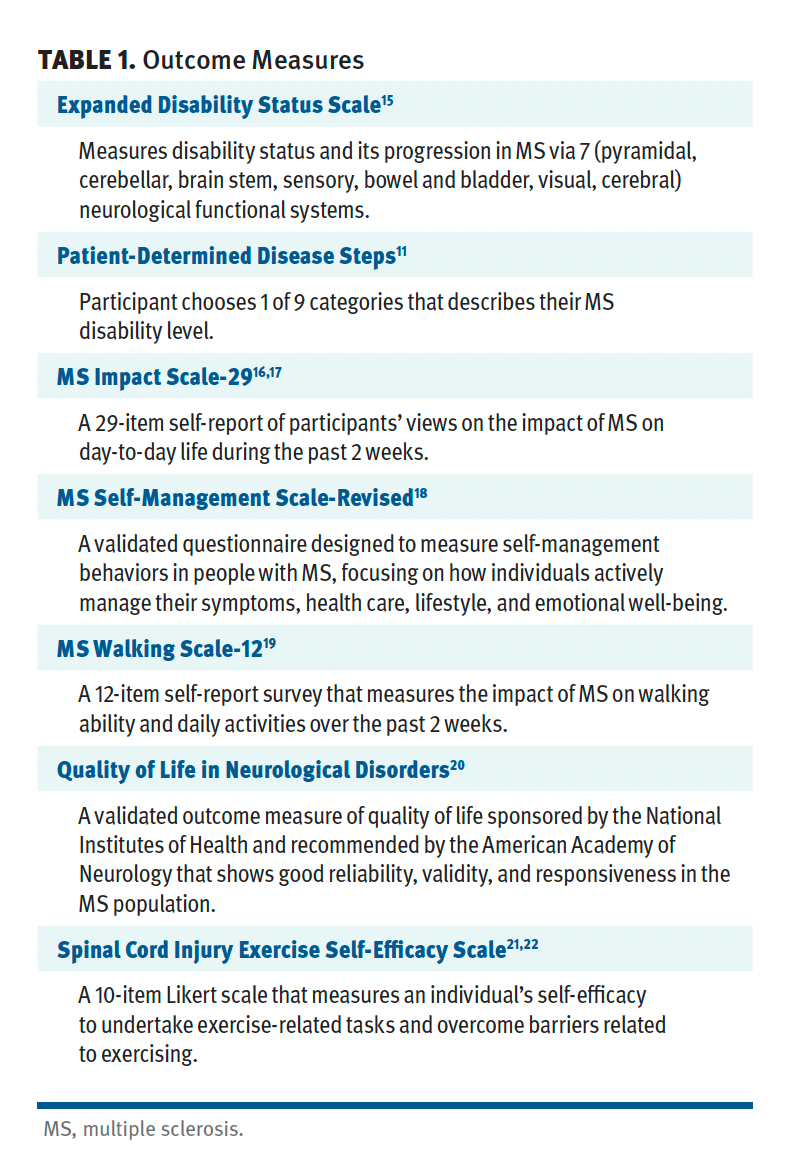
At study initiation, participants completed demographic data, the Expanded Disability Status Scale (EDSS),15 the Patient-Determined Disease Steps,11 the MS Impact Scale-29 (MSIS),16,17 the Multiple Sclerosis Self-Management Scale-Revised (MSSM-R),18 the MS Walking Scale-12 (MSWS-12),19 the Quality of Life in Neurological Disorders (NeuroQoL),20 and the Spinal Cord Injury Exercise Self-Efficacy Scale21,22 (SCI ES-ES; Table 1). Except for demographic data and EDSS scores, all measures were assessed again at 1, 6, 12, and 24 months after enrollment. The research coordinator contacted each participant via phone call or email, depending on their preference, 1 month before they were due to complete their electronic outcome measures.
Table 1. Outcome Measures
Data Analysis
Data were downloaded from the electronic portal, organized in Microsoft Excel, and then imported into SPSS Statistics 22.0 and HLM 7 for analysis. Prior to initiating analyses, we assessed for missing data. Data were determined to be missing completely at random by logistic regressions looking for significant effects of demographic and baseline patient-reported outcomes. Data were then imputed via regression modeling, specifically growth curve models,23-25 by estimating initial status (intercept) and growth over time (slope). These estimates were utilized in a linear regression formula to calculate each participant’s missing data up to the 6-month period (missingness was determined to be too extensive at 12- and 24-month periods to have reliable imputation). No significant differences were noted between original and imputed data sets, as validated by summary t tests, providing confidence in the use of our imputed data set.
Statistical analyses included descriptive statistics and analysis of variance (ANOVA) to describe the sample and evaluate differences in group characteristics. We also used repeated-measures ANOVAs to evaluate changes over time in each outcome measure and to determine whether any differences in change over time existed based on group membership. Additional analyses included calculation of change scores from baseline to 1 month and baseline to 6 months to examine effect size (ES) employing Cohen d. ESs were grouped into small (ES = 0.2), medium (ES = 0.5), and large (ES = 0.8),26 and an α level of 0.05 was used for statistical significance.
Participation in longitudinal data collection, 100% adherence at baseline, fell to 89% (1 month), 64% (6 months), 36% (12 months), and 22% (24 months). When examined by group, 1-way ANOVAs revealed significant differences between groups at 1 and 24 months. At 1 month, the MSI group had 40% adherence whereas the other 2 groups had 100% adherence. At 24 months, MSI had 0%, 4Day had 17%, and iCMS had 38% adherence. Thus, all analysis reported here was conducted on data collected at baseline, 1 month, and 6 months.
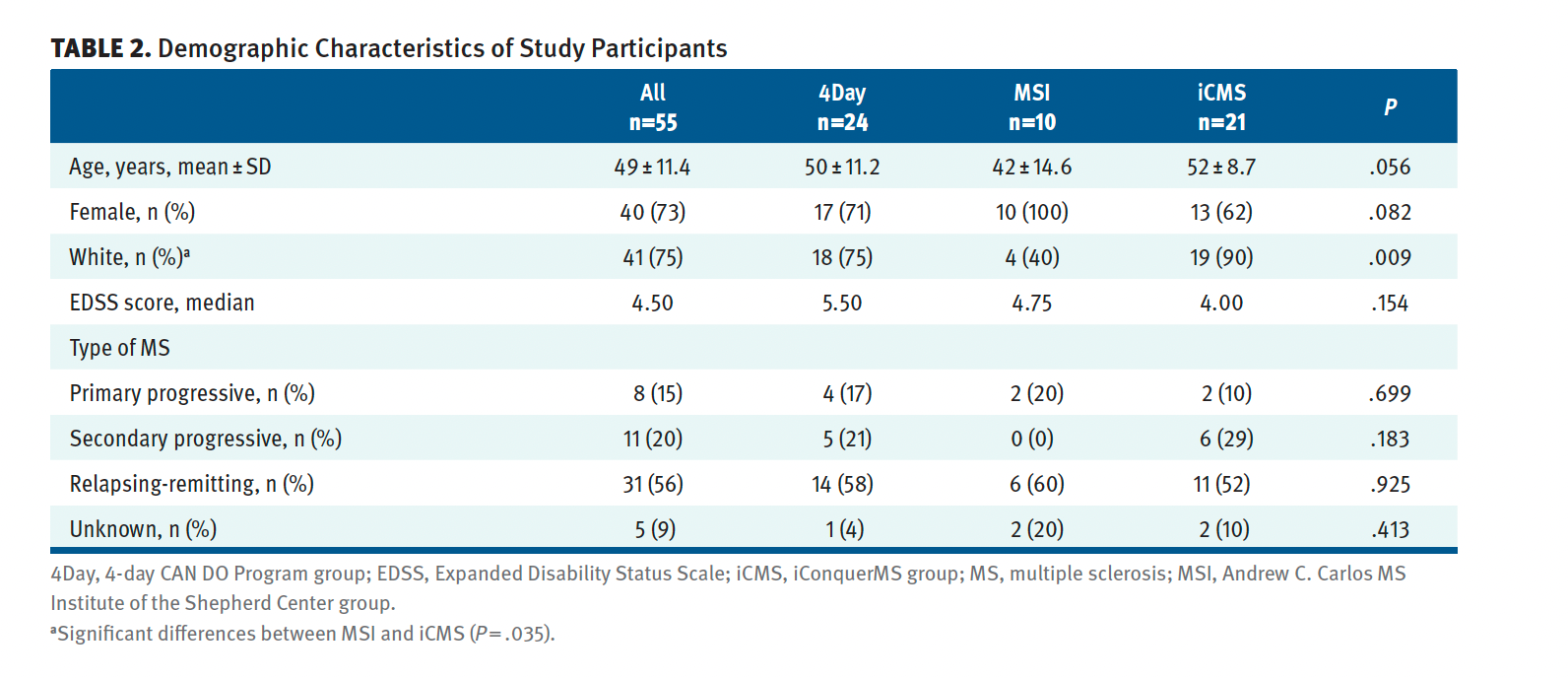
Participant demographics are provided in Table 2. Mean age (N = 55) was 49 ± 11.4; most participants were female (73%), White (75%), and had relapsing-remitting MS (56%) and a median EDSS score of 4.5. Using 1-way ANOVAs, we found significant differences between groups in ethnicity, with iCMS having the greatest number of White participants (90%). The groups were, however, balanced among all other characteristics.
Table 2. Demographic Characteristics of Study Participants
To look for change in outcomes over time in the entire sample, we conducted repeated-measures ANOVAs for all outcome measures. Because there were significant differences in ethnicity between groups, we controlled for this characteristic, but no significant covariate effects were uncovered. Results (Figure 1) reveal significant time effects across a 6-month time frame for 4 measures: MSIS physical (P = .044), NeuroQoL Emotional and Behavioral Dyscontrol (EBD; P = .023), NeuroQoL fatigue (P = .006), and MSSM-R (P = .003), with all 4 measures improving over time. In addition, MSIS psychological revealed near-significant improvement over time (P = .051). Notably, the greatest improvement in all these measures for the 4Day group occurred between baseline and 1 month, and there was a gradual reversal toward baseline from 1 month to 6 months. The MSI group demonstrated similar improvements in all measures from baseline to 1 month; however, the trend continued toward improvement and did not return to baseline between 1 month and 6 months. In contrast, the iCMS group scores either did not change or slightly worsened over time in 3 of the 4 measures. The measure on which the iCMS group improved over time was the MSSM-R.
Figure 1. Repeated-Measures ANOVA Significant Time Effect Plots
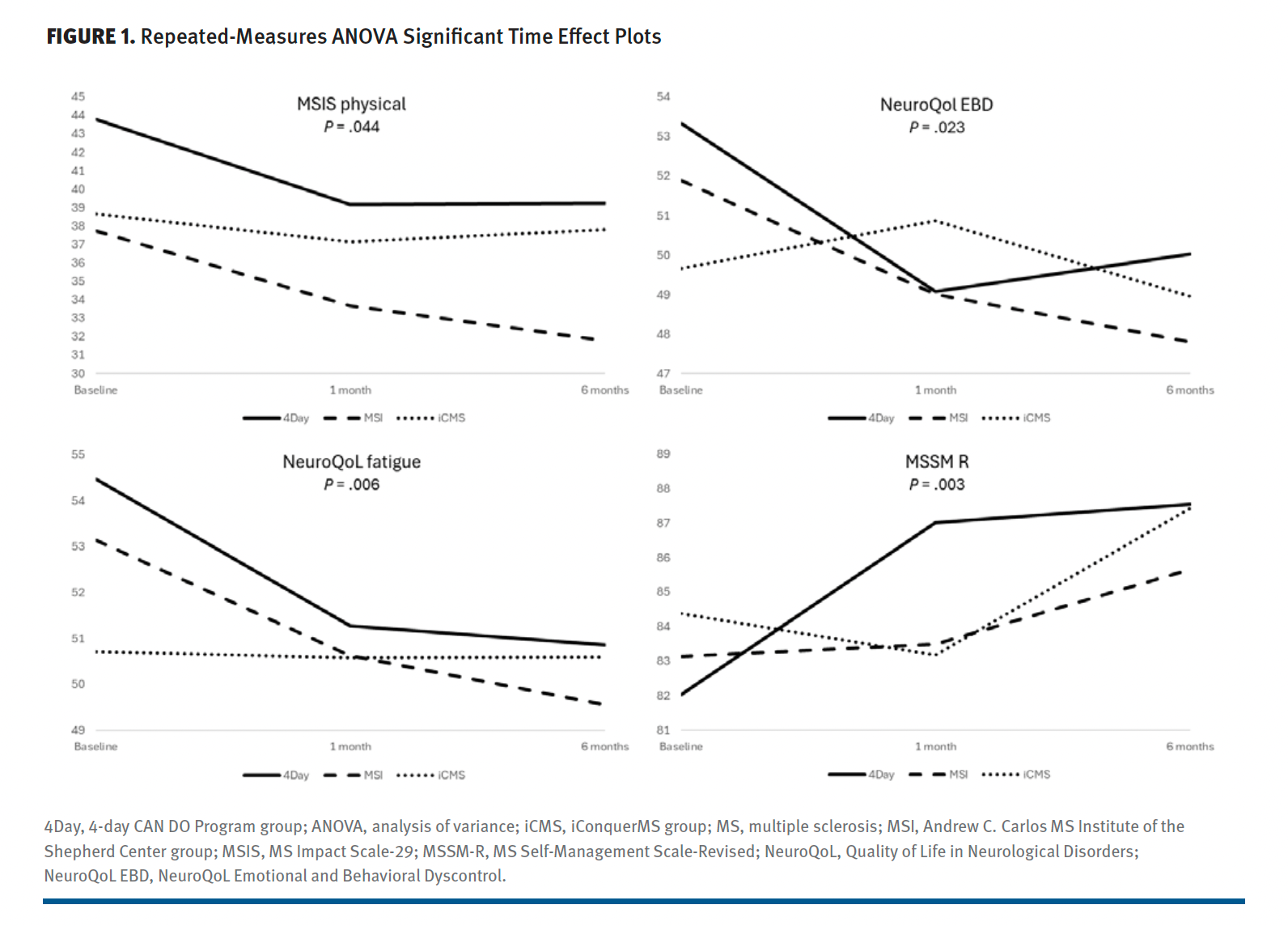
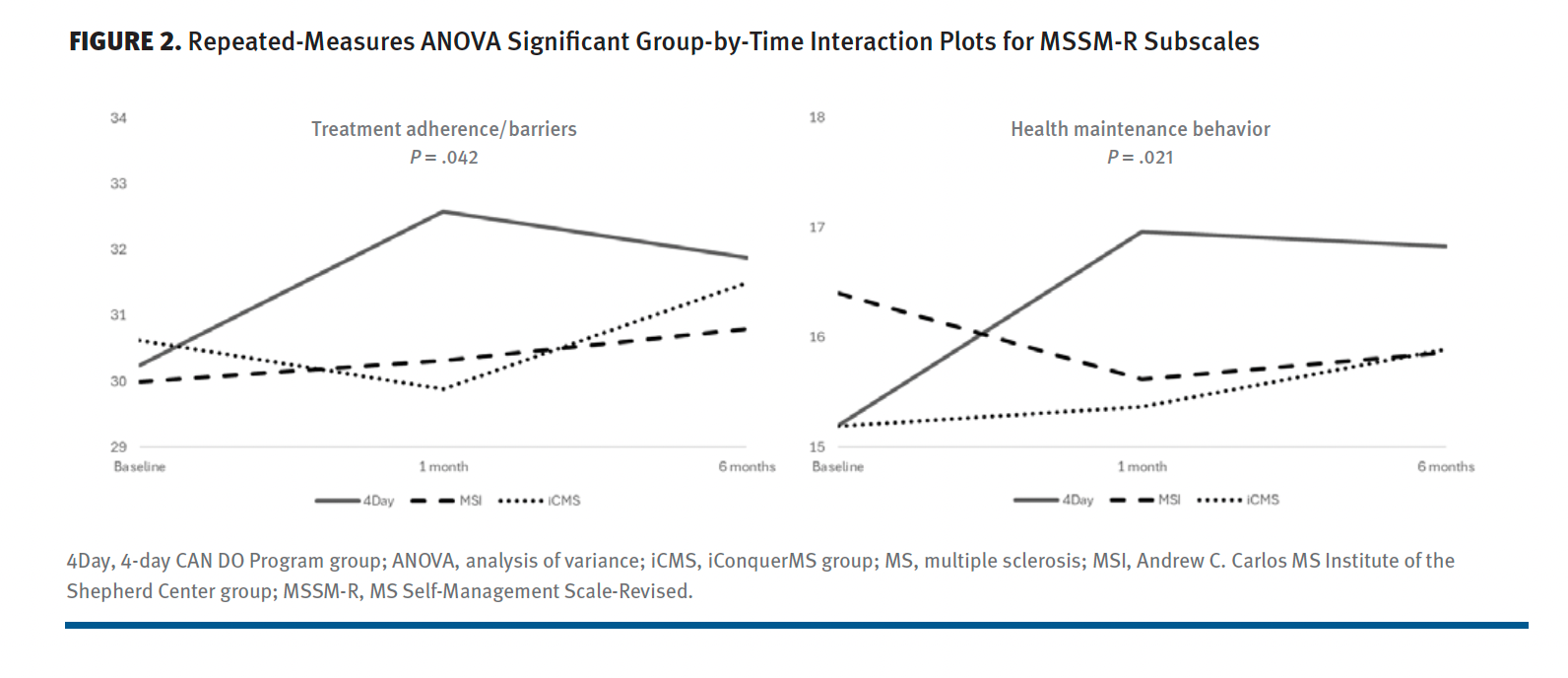
No statistically significant group-by-time interactions were observed, indicating that despite an overall significant change over time in the MSIS and NeuroQoL for the entire sample, the groups did not differ significantly from each other across the 6-month period (group plot lines were similar over time [Figure 1]). There were, however, significant group-by-time interactions for the 2 MSSM-R subscales of treatment adherence (P = .042) and health maintenance behavior (P = .021) (Figure 2).
Figure 2. Repeated-Measures ANOVA Significant Group-by-Time Interaction Plots for MSSM-R Subscales
Because no significant group-by-time interactions were observed, we examined change scores and ES for each outcome measure between baseline, 1 month, and 6 months. Table 3 presents the ES and P values for the change scores from baseline to 1 month. There were statistically significant differences between groups for the MSWS (P = .005), NeuroQoL anxiety (P = .029), NeuroQoL EBD (P = .042), MSSM-R total (P = .036), and the MSSM-R treatment (P = .036) and maintenance (P = .013) subscales. The 4Day group had the greatest improvements for all but 1 of these scales; the MSI group had the greatest improvement on the NeuroQoL anxiety subscale, as determined by change score and ES.
Table 3. Change Scores From Baseline to 1 Month After the Intervention for Participant-Reported Outcomes
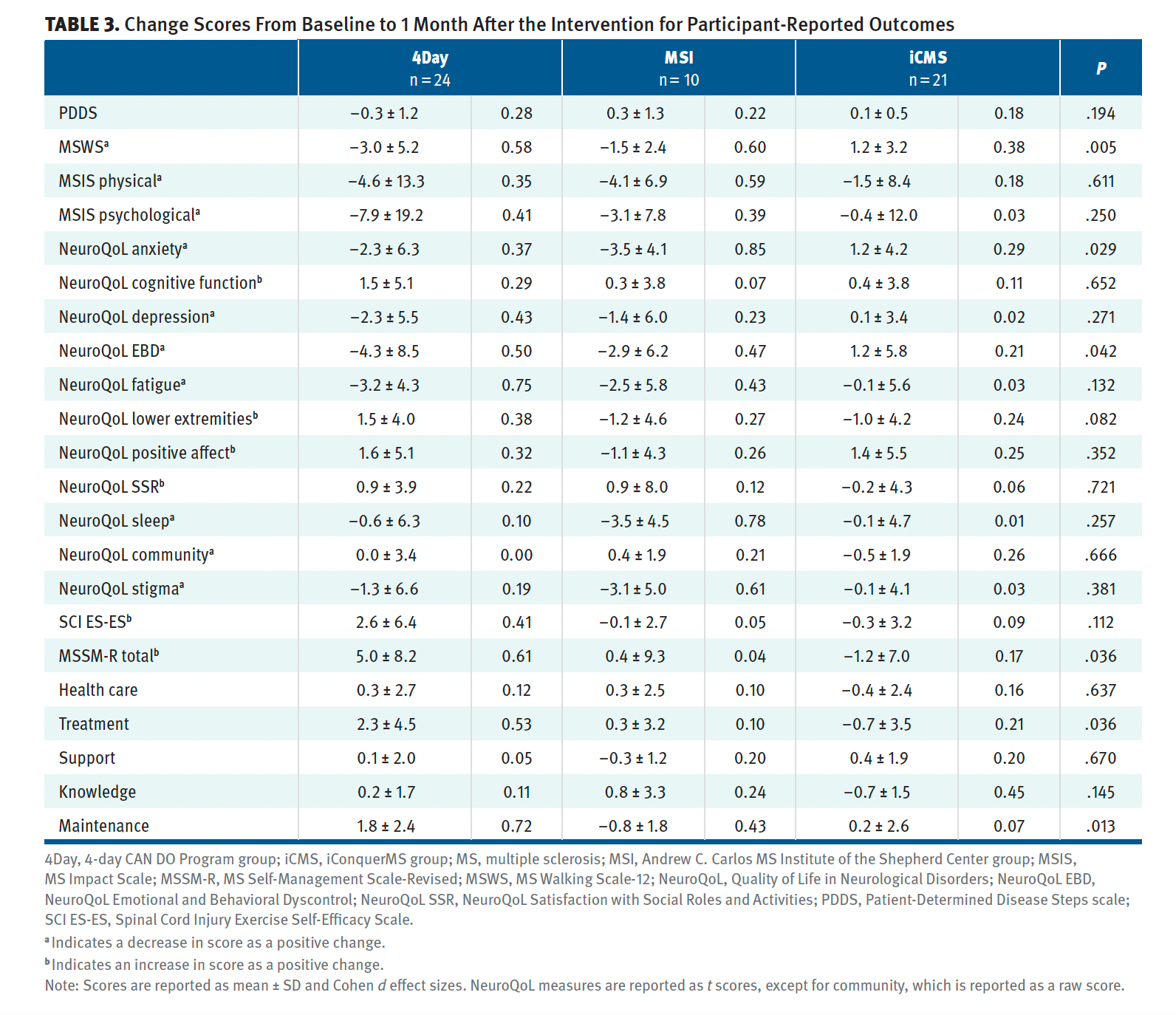
As determined by ES for change scores, the iCMS group had poor outcomes for all measures with small effects (ES < 0.5). The 4Day group had the best outcomes in change from baseline to 1 month as determined by ES. This group demonstrated medium to large ES on several measures: MSWS (ES = 0.58), MSIS psychological (ES = 0.41), NeuroQoL depression (ES = 0.43), NeuroQoL EBD (ES = 0.50), NeuroQoL fatigue (ES = 0.75), SCI ES-ES (ES = 0.41), and MSSM-R total (ES = 0.61), treatment (ES = 0.53), and maintenance (ES = 0.72) subscales. The MSI group had good outcomes and returned medium to large ES: MSWS (ES = 0.60), MSIS physical (ES = 0.59), NeuroQoL anxiety (ES = 0.85), NeuroQoL EBD (ES = 0.47), NeuroQoL fatigue (ES = 0.43), NeuroQoL sleep (ES = 0.78), and NeuroQoL stigma (ES = 0.61).
Post hoc tests revealed significant differences between the 4Day and iCMS groups on the MSSM-R (P = .033); between iCMS and both the 4Day (P = .006) and MSI (P = .044) groups for MSWS; between the iCMS and MSI groups (P = .016) for NeuroQoL anxiety; and between the iCMS and 4Day groups (P = .045) for NeuroQoL EBD. On all 4 of these measures, the iCMS group had statistically significantly worse outcomes.
Table 4 presents changes in scores from baseline to 6 months. There was a statistically significant difference between groups on the NeuroQoL depression (P = .037) and the MSSM-R knowledge (P = .029) and maintenance (P = .037) subscales, with the greatest improvement in the NeuroQoL depression and MSSM-R maintenance subscale for the 4Day group and in the MSSM-R knowledge subscale for the MSI group.
Table 4. Change Scores From Baseline to 6 Months After the Intervention for Participant-Reported Outcomes
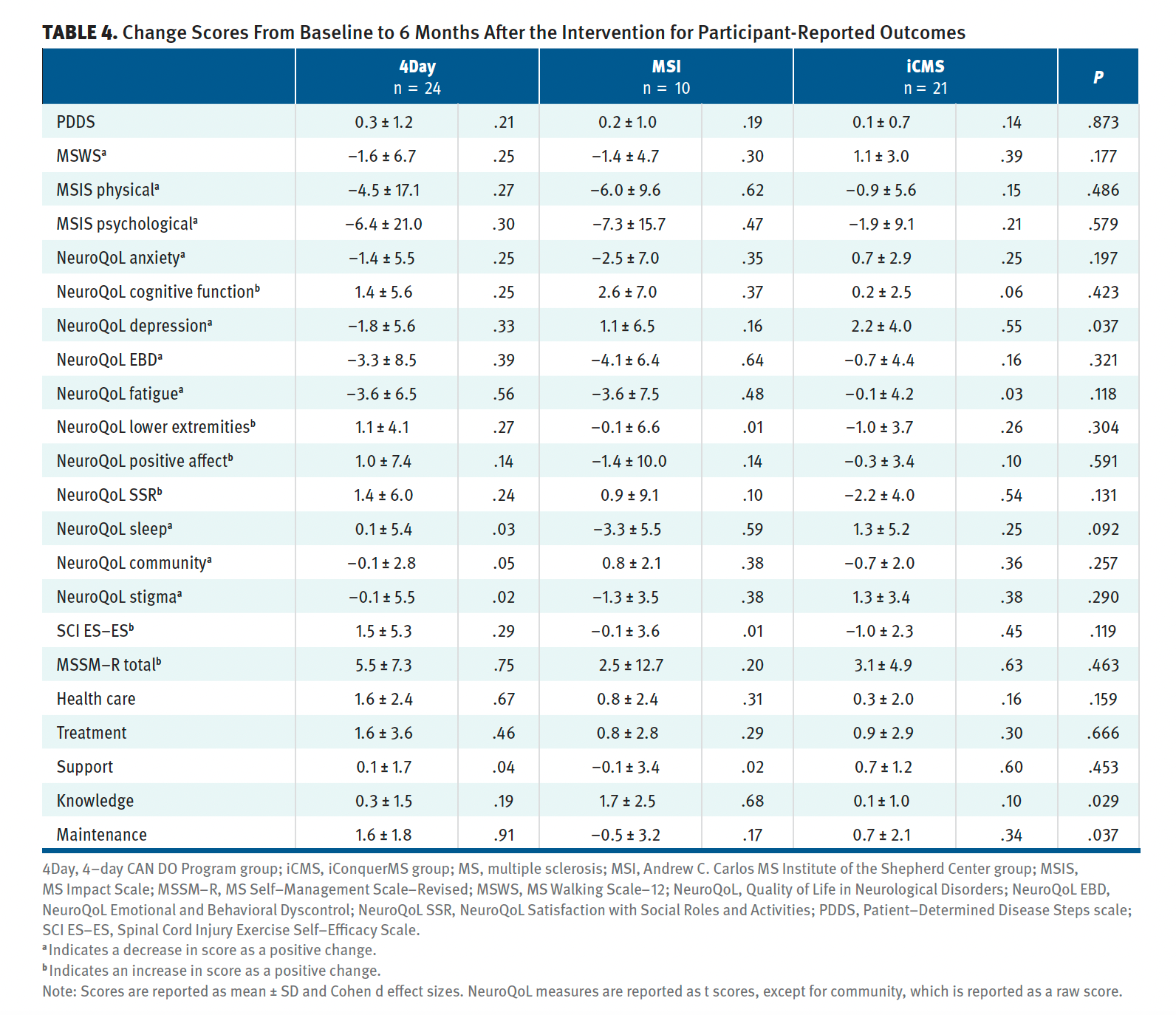
Any changes in the iCMS group continued to be negative with small ES, except for a medium ES noted in NeuroQoL depression (ES = 0.55), NeuroQoL Satisfaction with Social Roles and Activities (SSR; ES = 0.54), and SCI ES-ES (ES = 0.45) scales; all were worse at 6 months. Notably, the scores for MSSM-R total (ES = 0.63) and support subscale (ES = 0.60) improved, with medium ES.
Improvement with medium effects was noted for the 4Day group in the NeuroQoL fatigue (ES = 0.56) and the MSSM-R treatment subscale (ES = 0.46) and with large effects for MSSM-R total (ES = 0.75), health care (ES = 0.67), and maintenance (ES = 0.91) subscales.
Medium to large effects were also observed in the MSI group for MSIS physical (ES = 0.62), MSIS psychological (ES = 0.47), NeuroQoL EBD (ES = 0.64), NeuroQoL fatigue (ES = 0.48), NeuroQoL sleep (ES = 0.59), and MSSM-R knowledge (ES = 0.68) subscales. The MSI group had the most improvement in NeuroQoL sleep, whereas the other 2 groups experienced a decline.
Even though repeated-measures ANOVAs for the MSSM-R health care and knowledge subscales revealed significant time effects, there were no group differences, suggesting all 3 groups had significantly increased outcomes over time for these 2 measures. However, the 4Day group had the largest ES for health care (ES = 0.67) and the MSI group had the largest ES for knowledge (ES = 0.68) when examined from baseline to 6 months.
This pilot study compared outcomes between 3 different models of care for people with MS: a 4-day comprehensive, multidisciplinary MS program (4Day); a comprehensive, multidisciplinary MS institute (MSI); and registration with an online research platform (iCMS). Did comprehensive, multidisciplinary care yield better outcomes than traditional medical management of MS? For most outcomes, 4Day and MSI outperformed iCMS. These findings support the hypothesis that those receiving some form of comprehensive care, whether short and intense (4Day) or over time (MSI), experience either improvements or less decrement in self-management of MS, self-efficacy, and quality of life. These findings extend those from Ng et al, which showed that an earlier version of the 4Day program led to improvements in self-efficacy and health-related quality of life in people with MS.13 Our study results further demonstrate that the current 4Day program yields findings similar to those in a comprehensive clinical program (MSI) and show that both comprehensive approaches also improved perception of self-management.
A meaningful finding is that the 4Day program yielded comparable results to the MSI’s clinical comprehensive program. Notably, both the 4Day program and MSI involve strategies for patient engagement, are patient-centered, include education related to symptoms and their management, and provide resources that people with MS can access after completion of the program—all variables shown to improve patient outcomes.27-30 The 4Day program included an assessment of physical abilities, including walking and activity levels, and provided at least a consultation and education about what the person could do to improve or at least maintain their level of ability and social participation.28 It also included information about nutrition and tools to assist with activities of daily living, which may empower participants to feel more independent in their environment and lead to improvements in self-efficacy and quality of life.27,28 In addition, when they do not have access to such a program as is offered through the MSI, the 4Day program may provide participants with the knowledge and awareness needed to pursue additional resources and to better manage their activity for improved and more positive outcomes.
Both the 4Day and the MSI programs engage the person with MS in a discussion about their care and MS management. Patient engagement has been shown to improve the response to treatment in a variety of populations,31 including MS,27 and can lead to a reduced need for intervention and consumption of fewer resources.27,31,32 Understanding the mechanism for the changes in self-management, self-efficacy, and quality of life for the people enrolled in the 2 comprehensive programs warrants further exploration.
Another meaningful finding is that both the 4Day and MSI comprehensive programs generated improvements in self-management. Self-management of chronic conditions, such as MS, is considered a critical factor for and is correlated with self-efficacy.31-33 The active process of managing the disease may facilitate better adjustment and decrease secondary complications.33 There is also a positive relationship between quality of life, disability level, improved outcomes, and lower treatment costs.33-35 These improvements in self-management and self-efficacy may mean that participants in these comprehensive programs are better equipped to manage MS symptoms than those who do not participate (ie, the iCMS group).
That the 4Day program yields similar findings to the MSI for self-management, self-efficacy, and quality of life is also meaningful because it suggests that a short-term program may fill an unmet need for the MS population. People with MS report that it is difficult to access comprehensive, multidisciplinary care.35 In results from a recent survey conducted by the National MS Society and the North American Research Committee on Multiple Sclerosis, 3003 Americans with MS reported that their top 3 concerns related to their MS care were affordability, general practitioner (ie, non-MS specialist) level of MS knowledge and expertise, and access to an MS center for specialized MS care.35 Further, people with MS report that receiving care at an MS center ensures greater quality of and satisfaction with care.27,28 Although the literature is sparse, it is evolving, and evidence suggests that the complexity of MS requires a comprehensive, multidisciplinary approach for people with MS to maintain function and social integration.35,36 An American Academy of Neurology review suggests a critical need for integration across the care continuum for MS and community programs.36 The lack of comprehensive care programs places a substantial burden on people with MS as well as their family and community, health service providers, and the health care system. Thus, finding strategies to provide similar opportunities for a comprehensive approach to MS care is important, and a short, accessible program may provide an option for a person with MS who does not have access to such a clinical program or even for a provider who is knowledgeable about MS care.
Limitations
There are 3 significant limitations when considering our findings. The first and most notable limitation of this trial is the fact that data collection was conducted during a global pandemic and was severely impacted by it. Attrition was a significant issue. Second, given the nature of the study and the surveys utilized, we do not know the nature or the extent of care those in the iCMS group received. Finally, this study was performed with a relatively small group, with participants from 2 similar cohorts of people with MS and, again, a third for which interventions are not known. The findings of this study may not fully represent the broader MS population or fully represent the care that all participants received.
Despite the limitations, our findings suggest that MS education and care via a comprehensive outpatient program or a 4-day intensive workshop may lead to better self-efficacy for MS management. Future research should aim for diverse recruitment sources to increase the sample size to uncover statistically significant small effects and enhance the generalizability of results. It should also collect meaningful information regarding the MS-related care received to better understand the contributions of comprehensive MS treatment approaches and programs to outcomes in people with MS.
Acknowledgments: On behalf of the research team at the Shepherd Center CAN DO, we extend our sincere gratitude to the participants of the 2019 CAN DO Program for their invaluable contributions to the study.
Financial Disclosures: Deborah Backus, PhD, PT; W. Mark Sweatman, PhD, MBA; and Marina Moldavskiy, BS, ACRP-CP, were paid by Shepherd Center as employees to collect the data and perform analyses. There are no other financial disclosures.
Funding/Support: This study was supported by a grant provided by Sanofi. In-kind support for the clinical program was provided by CAN DO and the Shepherd Center.
Briggs FB, Hill E. Estimating the prevalence of multiple sclerosis using 56.6 million electronic health records from the United States. Mult Scler. 2020;26(14):1948-1952. doi:10.1177/1352458519864681
Green R, Cutter G, Friendly M, Kister I. Which symptoms contribute the most to patients’ perception of health in multiple sclerosis? Mult Scler J Exp Transl Clin. 2017;3(3):205521731772830. doi:10.1177/2055217317728301
Chiu C, Bishop M, Pionke JJ, Strauser D, Santens RL. Barriers to the accessibility and continuity of health-care services in people with multiple sclerosis. Int J MS Care. 2017;19(6):313-321. doi:10.7224/1537-2073.2016-016
Forbes A, While A, Taylor M. What people with multiple sclerosis perceive to be important to meeting their needs. J Adv Nurs. 2007;58(1):11-22. doi:10.1111/j.1365-2648.2007.04219.x
McCabe MP, Ebacioni KJ, Simmons R, McDonald E, Melton L. Unmet education, psychological and peer support needs of people with multiple sclerosis. J Psychosom Res. 2015;78(1):82-87. doi:10.1016/j.jpsychores.2014.05.010
McCabe M, Ebacioni KJ, Simmons R, McDonald E, Melton L. Satisfaction with service needs among people living with multiple sclerosis. NeuroRehabilitation. 2015;36(2):167-173. doi:10.3233/NRE-151204
Senders A, Sando K, Wahbeh H, Peterson Hiller A, Shinto L. Managing psychological stress in the multiple sclerosis medical visit: patient perspectives and unmet needs. J Health Psychol. 2016;21(8):1676-1687. doi:10.1177/1359105314562084
Pétrin J, Donnelly C, McColl MA, Finlayson M. Is it worth it?: the experiences of persons with multiple sclerosis as they access health care to manage their condition. Health Expect. 2020;23(5):1269-1279. doi:10.1111/hex.13109
Lonergan R, Kinsella K, Fitzpatrick P, et al. Unmet needs of multiple sclerosis patients in the community. Mult Scler Relat Disord. 2015;4(2):144-150. doi:10.1016/j.msard.2015.01.003
Learmonth YC, Ensari I, Motl RW. Cognitive motor interference in multiple sclerosis: insights from a systematic quantitative review. Arch Phys Med Rehabil. 2017;98(6):1229-1240. doi:10.1016/j.apMr.2016.07.018
Learmonth YC, Motl RW, Sandroff BM, Pula JH, Cadavid D. Validation of Patient Determined Disease Steps (PDDS) scale scores in persons with multiple sclerosis. BMC Neurol. 2013;13:37. doi:10.1186/1471-2377-13-37
Ratajska A, Glanz BI, Chitnis T, Weiner HL, Healy BC. Social support in multiple sclerosis: associations with quality of life, depression, and anxiety. J Psychosom Res. 2020;138:110252. doi:10.1016/j.jpsychores.2020.110252
Ng A, Kennedy P, Hutchinson B, et al. Self-efficacy and health status improve after a wellness program in persons with multiple sclerosis. Disabil Rehabil. 2013;35(12):1039-1044. doi:10.3109/09638288.2012.717586
iConquerMS. Accessed July 19, 2024. https://iconquerms.org
Kurtzke JF. Rating neurologic impairment in multiple sclerosis: an Expanded Disability Status Scale (EDSS). Neurology. 1983;33(11):1444-1452. doi:10.1212/wnl.33.11.1444
Hobart J, Lamping D, Fitzpatrick R, Riazi A, Thompson A. The Multiple Sclerosis Impact Scale (MSIS-29): a new patient-based outcome measure. Brain. 2001;124(pt 5):962-973. doi:10.1093/brain/124.5.962
McGuigan C, Hutchinson M. The Multiple Sclerosis Impact Scale (MSIS-29) is a reliable and sensitive measure. J Neurol Neurosurg Psychiatry. 2004;75(2):266-269.
Bishop M, Frain MP. The Multiple Sclerosis Self-Management Scale: revision and psychometric analysis. Rehabil Psychol. 2011;56(2):150-159. doi:10.1037/a0023679
Hobart JC, Riazi A, Lamping DL, Fitzpatrick R, Thompson AJ. Measuring the impact of MS on walking ability: the 12-Item MS Walking Scale (MSWS-12). Neurology. 2003;60(1):31-36. doi:10.1212/wnl.60.1.31
Cella D, Lai JS, Nowinski CJ, et al. Neuro-QOL: brief measures of health-related quality of life for clinical research in neurology. Neurology. 2012;78(23):1860-1867. doi:10.1212/WNL.0b013e318258f744
Kroll T, Kehn M, Ho PS, Groah S. The SCI Exercise Self-Efficacy Scale (ESES): development and psychometric properties. Int J Behav Nutr Phys Act. 2007;4:34. doi:10.1186/1479-5868-4-34
Stroud N, Minahan C, Sabapathy S. The perceived benefits and barriers to exercise participation in persons with multiple sclerosis. Disabil Rehabil. 2009;31(26):2216-2222. doi:10.3109/09638280902980928
Ferguson KK, Yu Y, Cantonwine DE, McElrath TF, Meeker JD, Mukherjee B. Foetal ultrasound measurement imputations based on growth curves versus multiple imputation chained equation (MICE). Paediatr Perinat Epidemiol. 2018;32(5):469-473. doi:10.1111/ppe.12486
Andridge RR. Quantifying the impact of fixed effects modeling of clusters in multiple imputation for cluster randomized trials. Biom J. 2011;53(1):57-74. doi:10.1002/bimj.201000140
Curran PJ, Obeidat K, Losardo D. Twelve frequently asked questions about growth curve modeling. J Cogn Dev. 2010;11(2):121-136. doi:10.1080/15248371003699969
Cohen J. Statistical Power Analysis for the Behavioral Sciences. Lawrence Earlbaum Associates; 1988.
Kesselring J. Neurorehabilitation in multiple sclerosis – resilience in practice. Eur Neurol Rev. 2017;12(1):31-36. doi:10.17925/ENR.2017.12.01.31
Khan F, Amatya B. Rehabilitation in multiple sclerosis: a systematic review of systematic reviews. Arch Phys Med Rehabil. 2017;98(2):353-367. doi:10.1016
/j.apMr.2016.04.016
Amatya B, Khan F, Galea M. Rehabilitation for people with multiple sclerosis: an overview of Cochrane Reviews. Cochrane Database Syst Rev. 2019;1(1):CD012732. doi:10.1002/14651858.CD012732.pub2
Institute of Medicine (US) Committee on Quality of Health Care in America. Crossing the Quality Chasm: A New Health System for the 21st Century. National Academies Press (US); 2001.
Holman H, Lorig K. Patient self-management: a key to effectiveness and efficiency in care of chronic disease. Public Health Rep. 2004;119(3):239-243. doi:10.1016/j.phr.2004.04.002
Bishop M, Frain MP, Tschopp MK. Self-management, perceived control, and subjective quality of life in multiple sclerosis: an exploratory study. Rehabil Couns Bull. 2008;52(1):45-56. doi:10.1177/0034355208320000
Wilski M, Tasiemski T. Illness perception, treatment beliefs, self-esteem, and
self-efficacy as correlates of self-management in multiple sclerosis. Acta Neurol Scand. 2016;133(5):338-345. doi:10.1111/ane.12465
Young CA, Mills R, Rog D, et al. Quality of life in multiple sclerosis is dominated by fatigue, disability and self-efficacy. J Neurol Sci. 2021;426:117437. doi:10.1016/j.jns.2021.117437
Chiu C, Bishop M, McDaniels B, Kim BJ, Tiro L. A population-based investigation of health-care needs and preferences in American adults with multiple sclerosis. J Patient Exp. 2020;7(1):34-41. doi:10.1177/2374373518812078
Haselkorn JK, Hughes C, Rae-Grant A, et al. Summary of comprehensive systematic review: rehabilitation in multiple sclerosis [RETIRED]: report of the Guideline Development, Dissemination, and Implementation Subcommittee of the American Academy of Neurology. Neurology. 2015;85(21):1896-1903.


