Commentary
Research Article
IJMSC Author Spotlight: Jon Skovgaard Jensen, MSc
Author(s):
IJMSC Author Spotlight shines a light on the people behind the research.
Jon Skovgaard Jensen, MSc, was the first author of Exploring the Effects of a 10-Day Ocean Sailing Intervention in People With Multiple Sclerosis: The Oceans of Hope Project published in the International Journal of Multiple Sclerosis Care (IJMSC) in February 2026.


Jon Skovgaard Jensen, MSc
Image courtesy of the researcher.
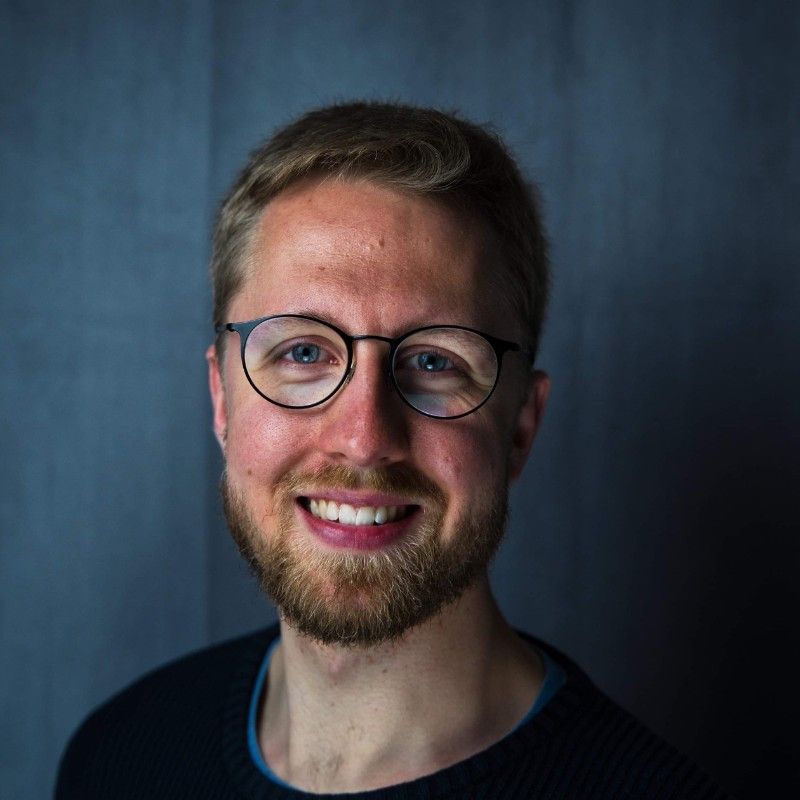
Skovgaard Jensen is a researcher and PhD candidate whose work sits at the intersection of physiology and biomechanics. His work typically focuses on muscle mechanical function and gait within stroke rehabilitation, but a quick conversation with a colleague led to this paper on sailing as an intervention for people with multiple sclerosis (MS).
He recently sat down with IJMSC to talk about the paper, his career path, and his research.
IJMSC: Tell us the story of this paper.
Jon Skovgaard Jensen, MSc (JSJ): This study originally came from my colleagues. The last author on the paper, Jens Bojsen-Møller, PhD, he’s an associate professor in the Department of Sports Science and Clinical Biomechanics at the University of Southern Denmark where I am. He’s a former Olympic sailor…and so he’s got a little bit of an interest in sailing, and then obviously the interest in exercise physiology and muscle function. And then he knows Mikkel Anthonisen, MD, who is also a sailor, and he’s a medical doctor as well. He’s the guy who founded the Oceans of Hope initiative, so he’s been sailing around the world with people with MS [multiple sclerosis] for years now. The idea that we might make a study out of this originally came from these two. A previous study summed up [blog entries] from participants that have done some sailing with the Oceans of Hope project, and they had experienced improvements in their physical well-being, amongst other things as well. So, they decided to do a study to figure out whether there are any objectively measurable physiological benefits to this type of intervention.
IJMSC: And how did you get involved?
JSJ: I was working on other projects within multiple sclerosis, and I heard that Jens was doing the study. I just talked to him and said that I’d love to be involved, sounds like a fun study…. And then we got other people involved, experts in the field, and got the test set-up going.
IJMSC: I love how sometimes it can be as simple as saying, “I’m interested in this.”
JSJ: It’s often the good conversations that you have during the coffee breaks that lead to new collaborations.
“It’s often the good conversations that you have during the coffee breaks that lead to new collaborations.”
IJMSC: That’s right, that’s completely true. Was anything about this research surprising to you?
JSJ: I try to stay a bit neutral. And this is, of course, also something that [I] did because of the scale of the study. It’s a very small study, so we knew in advance that we had to be careful in our interpretations. I thought that if we were going to see something, that we might see [it] on these postural sway parameters that we measured, but we didn’t. Regardless, there’s no clear consensus on how to interpret these data anyway. There might be reasons for that [null finding], and there might be some effects that we didn’t detect, but the most amazing thing to see…afterwards, despite all these nonstatistically significant findings, was the actual experience of these people that came back to the lab after the sailing tour. You could [clearly] see that they formed these personal relationships with each other, and they had positive experiences. So, on a personal level, [that was] very nice to see.
IJMSC: As a researcher, is it hard to get null results in a study?
JSJ: I don’t necessarily think so. As I said, I tend to try to stay very neutral about what we’re going to find…. I try to see it in a way that even if there’s not a difference, then it’s still a very important finding because it is…. Obviously, I’m a young researcher, and I haven’t had the experience of all these journals turning you down because you’re not showing big and amazing effects.
IJMSC: What is your main research interest? And how did that lead to MS in this paper?
JSJ: I have a background in both sport science and biomechanics. When I started my degree, I was very interested in muscle physiology and biomechanics, and I had a particular interest in research. During my bachelor’s degree, I started working on some studies on multiple sclerosis and Parkinson [disease] and that was what fostered the interest in neurological conditions and exercise physiology…. I was involved in some training studies when I was working on my bachelor’s; I was a student assistant supervising the delivery of the training intervention. I met all these people with multiple sclerosis and Parkinson [disease] and that also motivated me: We could actually make a difference for these people. That was the intro into neurological [research], and then combining that with my interest in biomechanics and human movement and exercise, that just felt like the way to go. I was hooked.
IJMSC: Would you consider sailing recreational therapy or therapeutic recreation? What is your experience with these terms? Are they familiar to you?
JSJ: I don’t think I’m necessarily very familiar with them. I think you have to think about [what] you’re considering. I think maybe it’s like a continuum between the 2 terms anyway, so you can’t necessarily clearly state that it’s one or the other. With the research that we’ve done on Oceans of Hope so far, if we put it in the context of exercise therapy, then [it might] lean toward recreational therapy, although we don’t really have the data to support it. We had only a small statistically significant effect on manual dexterity, and we were very careful in the interpretation of our data, given the study’s sample size, to not emphasize it too much. But then, the aspect of the potential of it as therapeutic recreation, it’s obviously not something that we focused on, but I definitely see a role for ocean sailing as therapeutic recreation.
IJMSC: What would you like clinicians to take away from your paper?
JSJ: I think ocean sailing is a feasible and safe way of engaging in physical activity for people with MS, and it potentially provides some physical and psychological health benefits. At the very least, we saw that [the participants] didn’t deteriorate in terms of physical function or neuromuscular function. We didn’t see any adverse events, apart from sea sickness, so no serious adverse events, no dropouts. They adhered to the protocol. So, I think it’s safe to say that it works as a type of recreational exercise. Ultimately, the message for clinicians [would be] to consider the context of exercise as therapy. I know this is something that’s increasingly considered in randomized controlled trials…. [Clinicians] could encourage people with MS to engage in activities that they might not [have] originally considered possible for them, or feasible for them, and that’s very much leaning on the personal reports that were summed up in the previous study from Oceans of Hope participants.
IJMSC: How could this paper impact clinical practice? What are the next steps for this research?
JSJ: I think this paper is going to challenge perceptions with regard to what exercise therapy is, and what is the right way…to do physical activity. I hope, at least, that we’ll inspire people to do more innovative [activities] and think about the possibilities of promoting long-term physical activity and enhancing physical well-being and quality of life at the same time, which, of course, is what we would like to look into. This is something that we don’t know right now because the study follow-up was limited. The next step, I guess, would be to conduct a larger randomized controlled trial, maybe additional different measurements, a control group, more follow-up, time points, and a larger sample size. And my main interest would be the potential physiological adaptations, but I think we need people that are deeply invested in focusing on the other aspect of health interventions as well, because we know that that’s a part of creating health interventions that work in real life outside the confinements of scientific research.
I think this paper is going to challenge perceptions with regard to what exercise therapy is, and what is the right way…to do physical activity. I hope, at least, that will inspire people to do more innovative [activities] and think about the possibilities of promoting long-term physical activity and enhancing physical well-being and quality of life at the same time….
IJMSC: What is your current research project?
JSJ: I started a PhD [and just] started a randomized controlled trial in stroke rehabilitation. I’m still involved in the neurological side of things…. [We’re] investigating robotic training compared to standard physical therapy in people who have severely impaired physical function.
IJMSC: Can you tell us how the Oceans of Hope research fits into the larger world of MS research?
JSJ: If we zoom out just a little bit, [we could] see the field of exercise therapy, a field where we’v seen quite a lot of progress, particularly in recent years…. A coauthor on the paper, Ulrik Dalgas, a professor at the Aarhus University, has done several projects [highlighting the importance of] exercise therapy in people with MS…. I guess if you zoom out even further for the larger world of MS care, then you’re going to see these initiatives that are a little bit outside [typical] research…. I think Oceans of Hope is a really good example of [how] people with a burning passion for MS care can make a difference…[with] more unconventional ways of being physically active.
IJMSC: One of the pillars of IJMSC and CMSC [Consortium of Multiple Sclerosis Centers] is multidisciplinary care. What does that mean to you? What do you value about multidisciplinary care?
JSJ: I think multidisciplinary care is very, very important. In my experience, we have to work together to make a difference. I typically work with medical doctors and physiotherapists, engineers, biomedical researchers, and data scientists, and people tend to have different perspectives depending on what their background is, and that typically just improves the discussion. So, you get some different perspectives, and people have some different approaches and considerations when running these types of projects. I think most people would agree that’s sort of the way to go about it these days.
IJMSC: How does you see research impacting clinical care? And then, since you’re a researcher, how does clinical care or practice impact research?
JSJ: Research allows us to systematically evaluate what’s going on, if [the focus of the research] is effective for clinical practice, and so you would hope that research actually works to advance clinical initiatives and pushes forward those initiatives that are really effective, and helps us locate where we are actually able to improve on current clinical practice. I have regular conversations with [clinicians], physiotherapists in particular…and that definitely affects me as a researcher because then they can [say], “We see this and that in the clinical setting,” and I can tell [them] whether that’s…an observation that I’ve seen in the scientific literature. We can go back and forth discussing if there is a gap somewhere. I will provide my knowledge from research. They will provide their observations from the clinic. That just improves and advances the scientific efforts that we’re making.