News
Research Article
IJMSC April 2026 Research Roundup
A review of the research published in April 2026 by the International Journal of MS Care.


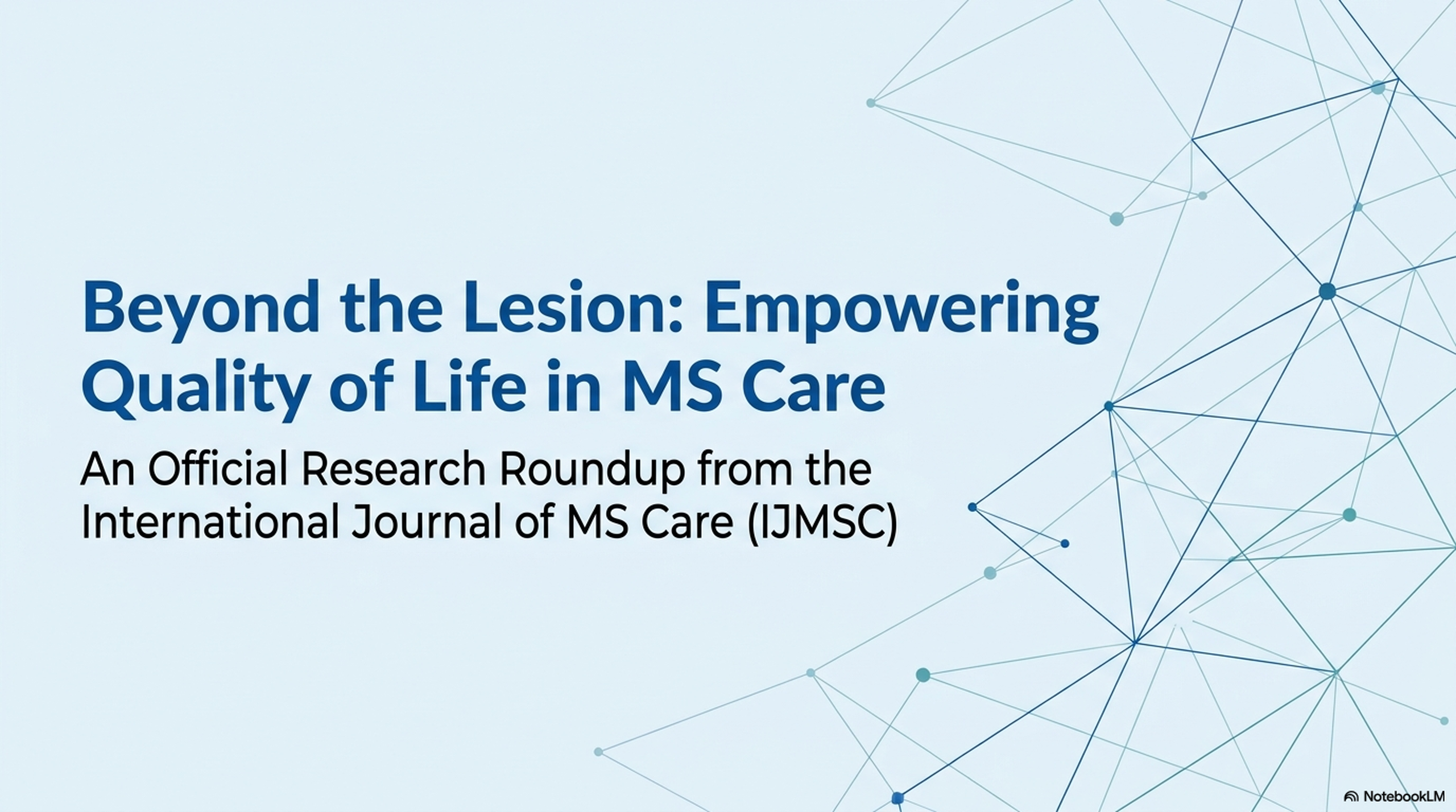
A unifying theme of the research published in April by the International Journal of MS Care is the critical impact of psychosocial factors and multidisciplinary support on the health-related quality of life (QOL) and mental well-being of individuals with multiple sclerosis (MS). While the topics vary, the data collectively emphasize that managing invisible symptoms and fostering autonomy through guidance are essential to maximize outcomes.
Youth with MS transitioning to adult care prioritize self-tailoring skills, such as deciding when and how to disclose their diagnosis, to maintain their social reputation and gain necessary accommodations at school or work. For these youth, the ability to manage emotional and social life areas—such as mood, fatigue, and social reputation—is considered as vital as medical care for successful self-management.
This meta-analysis demonstrates that meeting the established physical activity guidelines for MS (150 minutes of exercise per week) leads to clinically significant improvements in both physical and mental QOL. The research confirms that the guidelines are safe and effective, allowing clinicians to individualize exercise prescriptions based on patient preferences. This individualization may be particularly important as the study notes that exercise autonomy and enjoyment lead to higher motivation and better adherence to health-promoting behaviors.
The data show that people with MS who manage bowel symptoms independently have lower well-being compared to those who receive help from a health care professional, yet many avoid these discussions due to social stigma. The goal of intervention should be to move away from isolated self-management toward supported self-management that incorporates clinical guidance to reduce distress.
In April, IJMSC also interviewed Moira Smith, PhD, about her recent paper Finding Your Stride: Navigating Running With Multiple Sclerosis. A Qualitative Study. Both the interview and the research further reinforce the theme of using proactive clinical support to empower people with MS.


