News
Research Article
IJMSC May 2026 Research Roundup
The May 2026 research published by the International Journal of MS Care emphasizes a multidimensional approach to treatment, addressing both the physical and emotional challenges that evolve throughout the disease course.
The May 2026 research published by the International Journal of MS Care emphasizes a multidimensional approach, addressing the physical and emotional challenges that evolve throughout the disease course.


Positive Psychology Intervention
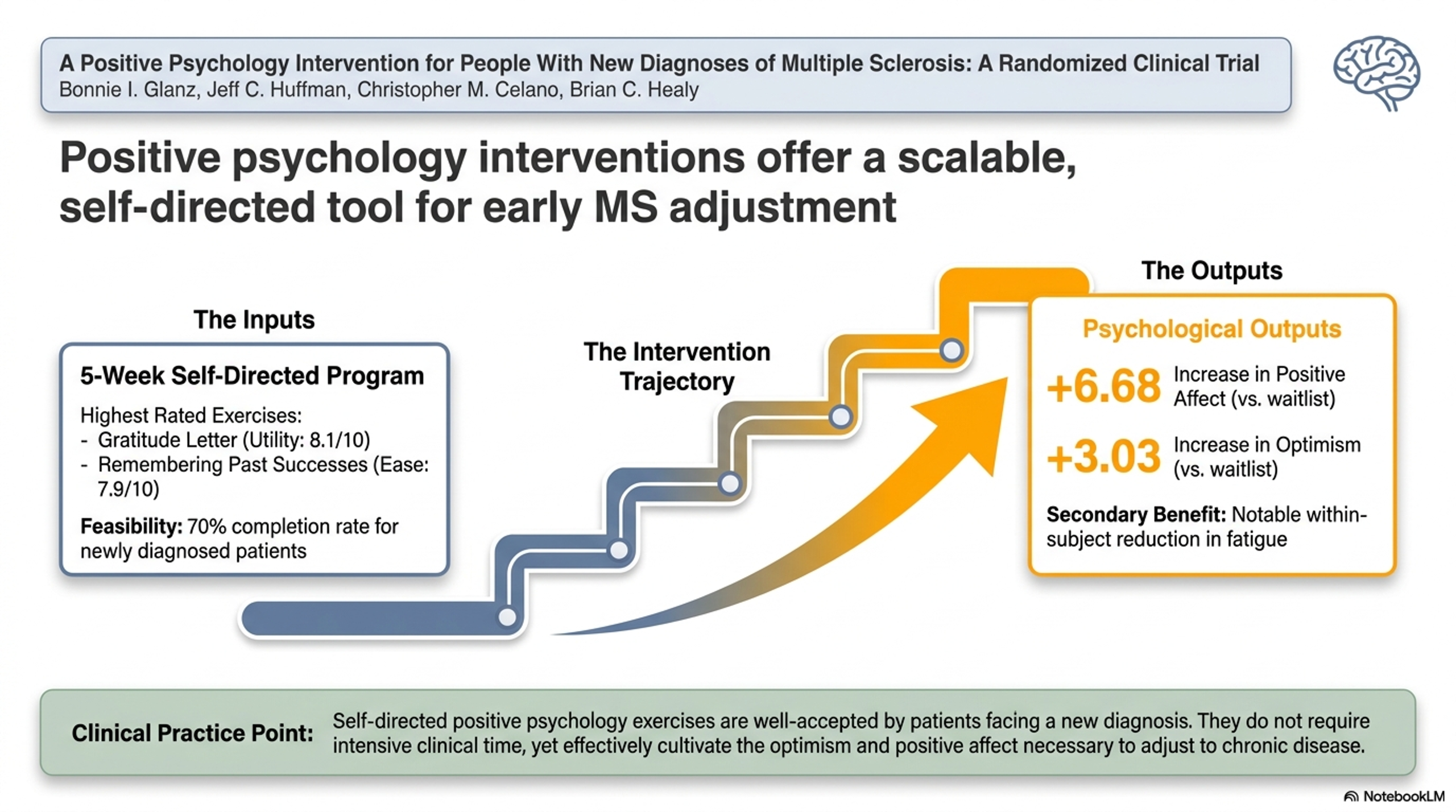
A Positive Psychology Intervention for People With New Diagnoses of Multiple Sclerosis
This phase 1 randomized trial evaluated a 5-week, at-home, self-directed positive psychology program designed to help people adjust to a new MS diagnosis. Data show the intervention was feasible and well-received, leading to significant increases in optimism and positive affect compared to a waitlist control group. These findings suggest that low-cost, self-directed exercises can be a promising tool for supporting the emotional well-being of people with MS during the stressful period immediately following their diagnosis.

Aging and MS: Pathophysiology and Clinical Function
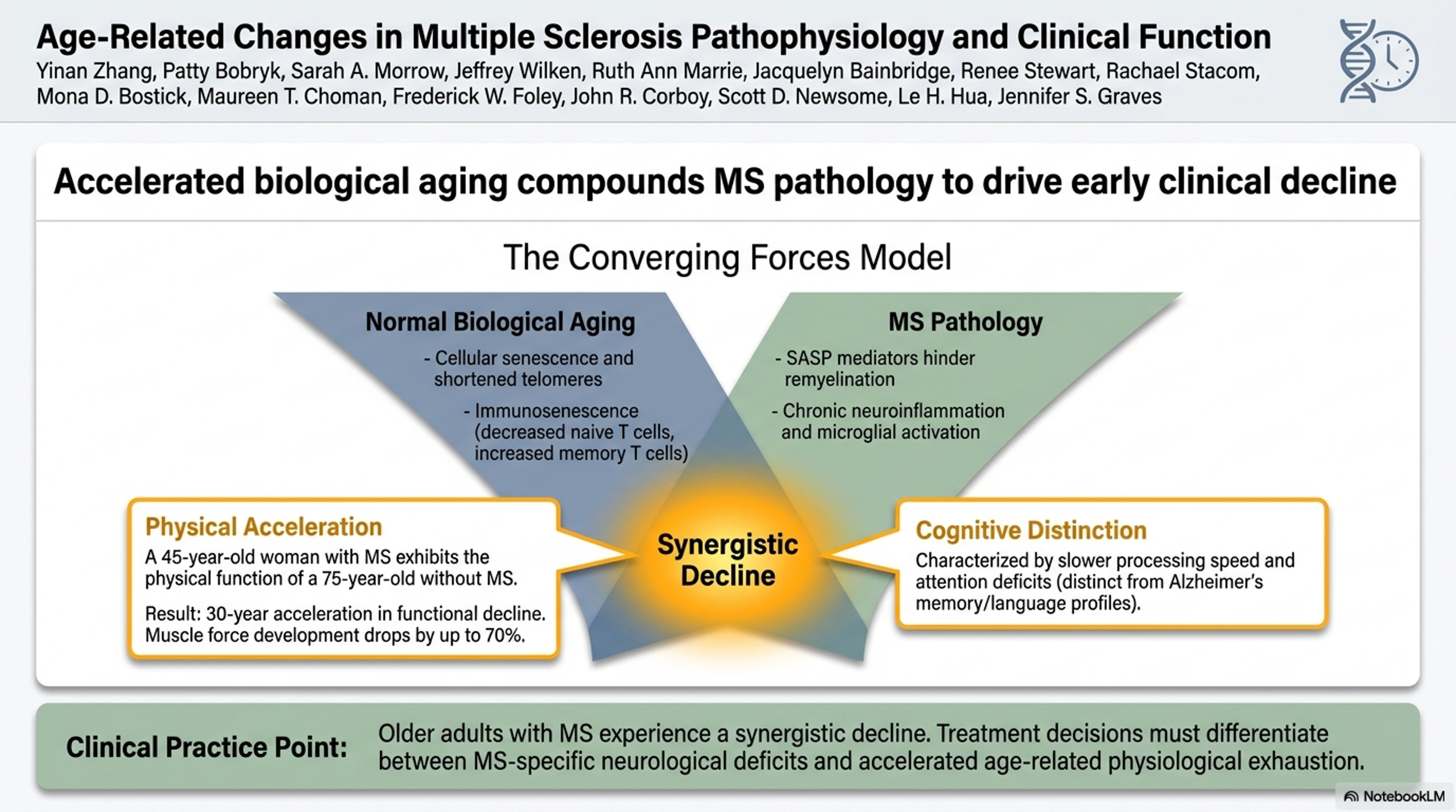
Age-Related Changes in Multiple Sclerosis Pathophysiology and Clinical Function
This review examines the dual burden of MS-related damage and biological aging, noting that processes like cellular senescence can accelerate neurodegeneration and functional decline. Clinical data shows that people with MS may experience physical and neuromuscular decline—such as loss of muscle power—much earlier and more severely than the general aging population. The authors emphasize that cognitive changes in aging people with MS typically affect processing speed and attention, which differs from the language and executive function deficits seen in Alzheimer disease.

Social Satisfaction, Depression, and Anxiety: Group or Individual Therapy
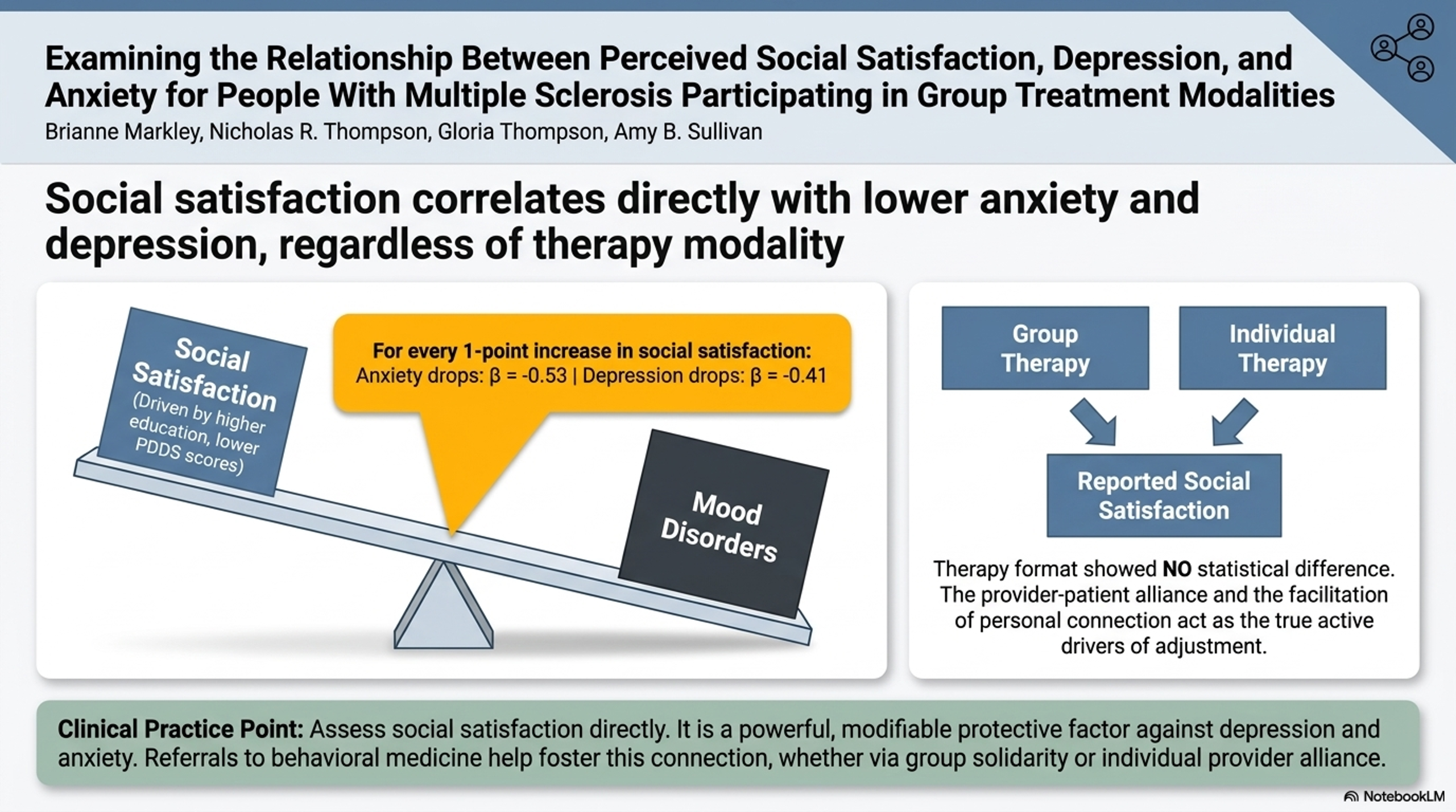
This retrospective study explored how social satisfaction relates to mental health outcomes for people with MS participating in different types of psychotherapy. While the specific therapy modality (group vs individual) did not significantly impact social satisfaction scores, higher levels of social satisfaction were strongly linked to reduced anxiety and depression. The results highlight that social connectedness is a critical predictor of psychological well-being, suggesting clinicians should prioritize assessing social satisfaction in their interdisciplinary management plans.

Radial Extracorporial Shock Wave Therapy
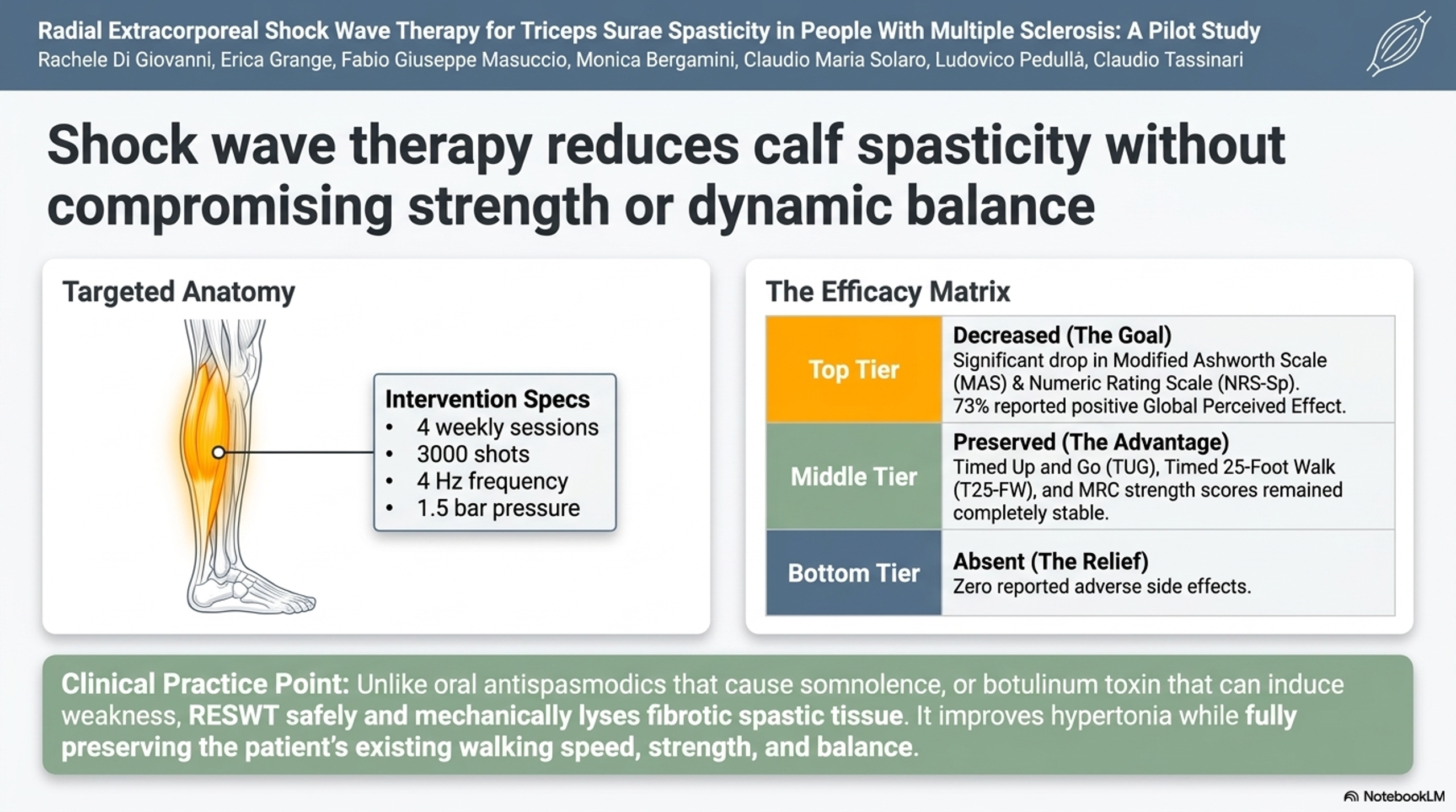
This pilot study investigated the use of radial extracorporeal shock wave therapy (RESWT) to treat calf muscle spasticity in 26 individuals with MS. After 4 weekly sessions, participants showed a significant reduction in both objective and subjective spasticity measures without any negative impact on their gait speed, muscle strength, or balance. The researchers conclude that RESWT is a safe, low-cost, and nonpharmacological option for focal spasticity management that could potentially be administered by various members of the rehabilitation team.
Collectively, these papers provide actionable insights for tailoring care, from early psychosocial support to innovative nonpharmacological treatments for spasticity and aging.
Want more IJMSC research? Click here.