
Commentary
Research Article
IJMSC Author Spotlight: Lita Buttolph, PhD, DSOM, MS, LAc
IJMSC Author Spotlight shines a light on the people behind the research.
Lita Buttolph, PhD, DSOM, MS, LAc, was the first author of Perceptions of People With Multiple Sclerosis Who Practice Tai Chi and/or Qigong: A Mixed-Methods Study published in the International Journal of Multiple Sclerosis Care (IJMSC) in February 2026.


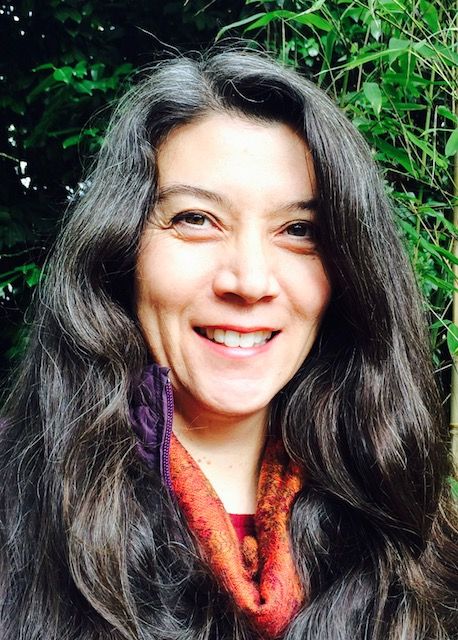
Lita Buttolph, PhD, DSOM, MS, LAc
Image courtesy of the author.
Buttolph began her career in ecology and natural resource management and has a PhD in rangeland science from the University of Utah. Alongside her work and research, she began practicing qigong in 1999 and began teaching it in 2005. Since 2013, she has been conducting research in complementary and integrative health, earning a master’s of science in integrative medicine research and a PhD in Oriental medicine and classical Chinese medicine from the National University of Natural Medicine.
She is currently a research investigator and adjunct faculty at the National University of Natural Medicine. Her work bridges traditional healing practices and rigorous scientific research, reflecting a strong commitment to integrative approaches to health and well-being.
Dr Buttolph recently sat down with IJMSC to talk about the paper, her career path, and her research.
IJMSC: Tell us the story of this paper.
Lita Buttolph, PhD, DSOM, MS, LAc (LB): I became interested in qigong from my own personal experience as a qigong practitioner. About 27 years ago, when I first started practicing qigong, I had immediate, amazing health benefits after a month of practicing. So I thought, there’s something very unique about this, and I continued to practice and eventually became a certified instructor. Then, over the course of the 20 years or so I’ve been teaching, I’ve had students coming in with different neurodegenerative conditions, including some students with MS [multiple sclerosis]. Seeing how they responded to qigong was really inspiring.
I had a career as an ecologist in my past life, and then, partly because of my qigong training, I was inspired by the theories and principles of traditional Chinese medicine, and eventually went back to school and got a doctorate in East Asian medicine. During that doctorate program, I also got a master’s in integrative medicine research, so for my master’s thesis, I conducted a study of people with MS who were randomly assigned to attend preexisting qigong classes in the community. That was a great experience to get familiar with clinical research and to start working with people with MS. What we found from that study is that the people who stuck with qigong received a lot of benefits from [it]. And [even for] the people who dropped out of the study, we…were able to get information from them on why they dropped out. And some people said they didn’t feel comfortable being in a class with people who didn’t have MS; some people said that some of the movements were uncomfortable or were strange or the room was too hot. And so there was some really helpful information to understand [the] challenges and barriers people with MS who want to practice this form [of exercise] might have.
I started a postdoctoral training program back in 2021 called the Building Research Across Interdisciplinary Gaps Program, funded by the NIH [National Institutes of Health]. For that fellowship, I conducted 2 studies. One was a survey of qigong experts who had experience working with people with MS, and it also included a survey of MS experts, such as neurologists and physical therapists, to find out some of the key components [needed] to develop a qigong exercise protocol that would be acceptable for people with MS. From that survey, I thought, well, it’s also important to get the patient’s perspective on their experience with qigong and MS, so that prompted this current study interviewing people who had experience with either qigong or tai chi or both. I should say that I consider tai chi a subset of qigong with more of a martial arts component, but some people might split them up. When I say qigong, I mean both qigong and tai chi. We conducted focus groups. We had 13 participants total, and got to understand their experience—some of the benefits they received, some of the challenges they have with practicing—to help identify more of the key components to a long-term sustainable practice.
IJMSC: This goes back to the beginning, but who introduced you to qigong?
LB: I was working in an office, and the spouse of one of my colleagues just happened to be talking to somebody in the cubicle nearby, and mentioned she was starting a qigong class. I popped my head out and said, “I’m interested!” I had studied tai chi for a couple of years prior to that, but then had moved, and so I had stopped that practice….
IJMSC: It’s always interesting how small choices influence your life.
What about this research was surprising to you?
LB: Some people who had been practicing for a very long time had really remarkable stories of almost being symptom-free from their MS. They really attributed a lot [of that] to their qigong practice. Another interesting finding was actually a result of COVID…; [it allowed] people who would normally just take a class once a week to be able to go online and take classes every day, or take classes 5 days a week. Even though it was online, that daily or more regular practice really boosted the benefits they experienced, so that was a little surprising. There was something positive that came out of the pandemic in that people were able to practice more.
IJMSC: What led to your interest in holistic practices?
LB: When I started practicing qigong, I was working as a research scientist in the natural resources and ecology realm. Part of my teacher training when I studied qigong…was Chinese medicine theory and the acupuncture points that the qigong movements connect with. I fell in love with it, and I thought, “Oh gosh, I would love to have a career in this, but I already have a PhD. I can’t go back to school,” and so I put it off for a long time. Finally, there was an opportunity where my work was kind of slowing down, and I thought, “Well, if I’m going to do this, I’m going to do it now.” And that’s when I made the career change and started to study Chinese medicine. It’s been a great change for me. I’ve been really happy with it. And then, because I had a research background already, I really wanted to continue, not only to have a private clinical practice, but also to continue to do research.
IJMSC: And you mentioned that there were some people with MS in your qigong classes. Is that how you were introduced to the possibility of MS research or was there another influence that led you in that direction?
LB: It was, I think, a combination of things. Some of it [was the] students that I’ve had, some of it [was] friends and colleagues with MS, and I know people with other neurodegenerative conditions, and so I knew I was interested in studying neurodegenerative conditions. Then, when I was doing my master’s, and had to decide on a population to study, I found that there wasn’t as much research [being] done on MS as there was for, say, Parkinson [disease] or other conditions. And my mentor [Angela Senders, PhD, ND, MCR] actually was also doing research on MBSR [mindfulness-based stress reduction] for people with MS, so it was a good fit.
“A lot of the people in the focus groups thought of qigong as medicine. They said, ‘This is my medicine, so I have to do it every day because it’s medicine.’”
IJMSC: When I was looking into tai chi and qigong, the terms therapeutic recreation and recreational therapy came up. Do you feel that either of those is an appropriate classification?
LB: II think it could be either. I’m not sure if you want to distinguish between a recreational therapy or a therapeutic recreation. I also think it depends on how the person, the participant, views it, too. A lot of the people in the focus groups thought of qigong as medicine. They said, “This is my medicine, so I have to do it every day because it’s medicine.” So I would think of it more as a recreational therapy, whereas other people might be doing it because they…loved it and they felt good afterwards. I think it could be either recreational therapy or therapeutic recreation. I know there [are] some physical therapists [PTs] now that integrate qigong and tai chi into their [practices]. I don’t think there’s quite a lot of that, [because] there’s not that formal referral chain yet, but it would be nice to get there sometime. I know [that’s] starting to happen with yoga.
IJMSC: IJMSC has had a number of papers submitted exploring these opportunities for people with MS: dance, yoga, tai chi. So I like your point about recreational therapy and therapeutic recreation running alongside each other, and then when they cross over, when the physical therapists start to incorporate some of these methods into their practice, that might be the point where things get more formalized, more accepted.
LB: Yes, and there are discussions among [those in] the qigong research community and attempts to have more standardized and specialized training among qigong practitioners, similar to how people are now certified yoga therapists and can work with clients; I’m not sure if they can bill insurance at this point yet, but I think there’s an effort in the qigong world to start to develop that for qigong practitioners. So it’s not only the PTs who are teaching some qigong, but it’s the qigong instructors who have a certification that allows them more easy access to [rehabilitation] referrals. I don’t think we’re quite there yet, but there’s an effort to do that, and I think that’s a next step that needs to be done in research.
“There are lots of adapted forms of tai chi and qigong, as well as other mind-body practices that are potentially safe for their patients to participate in. I think both clinicians and the patients themselves should know that qigong and tai chi are really diverse; there’s a wide range of styles and forms, so they should investigate and try out different styles and find something that feels right for them and works for them.”
IJMSC: What would you like clinicians to take away from your paper?
LB: I know that clinicians are now referring patients to do exercise, so if they are [recommending] exercise, they might consider mind-body exercises, whether it be qigong or tai chi or others, especially if they’re group classes. [I would also recommend] finding group classes that are ADA [Americans with Disabilities Act] accessible, that are geared towards people with movement limitations, like Tai Chi for Better Balance, which has become a very popular program, especially for people who are older, but also for people with impaired balance. There are lots of adapted forms of tai chi and qigong, as well as other mind-body practices that are potentially safe for their patients to participate in. I think both clinicians and the patients themselves should know that qigong and tai chi are really diverse; there’s a wide range of styles and forms, so they should investigate and try out different styles and find something that feels right for them and works for them. A lot of times, the instructor plays a really important role in how you learn and how accessible it is, so finding an instructor that they like is also important.
IJMSC: You mentioned a little bit about future steps for this research. What area are you focusing on now?
LB: I’m currently planning to do a study that is basically refining a qigong protocol specifically for MS fatigue. My patient population is [made up of] people with moderate to severe disability, so I feel like exercise options are more limited in this population. Because qigong can be adapted to sitting, I thought this might be an accessible form for people with higher levels of MS disability. I’ve submitted some grants to try to get funding for this next phase of study, basically refining this protocol based on expert opinion and an MS advisory board. We plan to develop this intervention, and then we would pilot test it for feasibility and eventually have a larger randomized controlled trial.
We also just also published an umbrella review of mind-body interventions for MS.
IJMSC: Can you give us the 10,000-foot view of how this research fits into the larger world of MS research?
LB: Qigong and tai chi and other mind-body interventions are multicomponent forms of exercise, which means that they address not only physical health, but also can address psychological health and cognitive health. I feel like this is a plus, because you can go to the gym and walk on a treadmill, but these types of movement also integrate relaxation and help with cognition. They can help with a lot of different domains. I guess in terms of MS care in general, I think this should be considered a type of rehabilitation therapy for people. Again, the field needs to develop a little more, but I see it as a rehabilitation therapy that could be a very effective option.
IJMSC: One of the pillars of IJMSC and CMSC [Consortium of Multiple Sclerosis Centers] is multidisciplinary care. Does that mean anything to you in your research, your work?
LB: Absolutely. I love this idea of a collaborative approach to health care for people with MS and for everyone in general. There are different ways that patients can receive support, and by having a multidisciplinary care team, hopefully all of the different needs of the patient can be addressed—definitely exercise and movement and stress reduction, all those aspects could be included in a qigong practice.
”...my qigong teaching has had a big impact on my research, and it’s directly influencing what I’m studying right now. Teaching people with MS and other neurodegenerative conditions has also helped me understand what their needs and challenges are, so it’s helping me design better studies so that I know what may be better ways to recruit people and retain participants.”
IJMSC: How does research impact clinical practice and how does clinical practice impact research?
LB: Personally, I wear different hats—I’m a researcher, I’m also an acupuncturist, and I’m also a qigong instructor. I think the research allows me to better understand the different conditions, the challenges, and opportunities for people with MS as well as people with other neurodegenerative conditions and autoimmune conditions, so it helps me become a better provider because I understand those with the condition better. In terms of how clinical practice affects my research, again, obviously, my qigong teaching has had a big impact on my research, and it’s directly influencing what I’m studying right now. Teaching people with MS and other neurodegenerative conditions has also helped me understand what their needs and challenges are, so it’s helping me design better studies so that I know what may be better ways to recruit people and retain participants.


